%40300x.avif)
During the 2025 EOS Conference, when asked about his take on whether fractional Integrators could work, Gino Wickman said,
“EOS Worldwide was a virtual company and a fractional company for 8 years. Don gave 60% of his time as Integrator. I gave 25% of my time as Visionary. The Marketing person was a fractional marketing company. The IT guy was fractional. So, I’m all for it. It absolutely works.”
And yet, there’s so much controversy in the EOS community about whether "Fractional Integrators” work. Why?
I think it’s for a few reasons. Here are the top three that I hear most often:
- It’s hard to imagine anyone filling such a critical leadership seat “part time.”
- It’s been done wrong, not EOS pure.
- It’s been unethical, with Fractional Integrators taking the role of Implementers.
All good reasons for why our community is split on this issue!
When I started Beacon & Blade, it was in response to a problem that I saw. When clients had the right person in the Integrator seat, I would teach the tools, they’d learn, grow, find their groove, and graduate.
However, it was a much different story for clients with the wrong person, or worse, the Visionary stuck in the Integrator seat. I would teach them the same tools, but the learnings didn’t translate into the day-to-day practice that they’d need to gain the same kind of traction as those organizations with an amazing Integrator.
I was frustrated right along with them. I could teach the tools, but short of stepping into the organization myself to help drive traction, there wasn’t much more I could do.
That realization eventually led to Beacon & Blade. As we began building the model, the very objections our community raised about fractional Integrators were always in the back (or maybe the forefront) of our minds.
And in the end, those objections shaped how we built it.
Objection #1 – "How can someone fill such a critical leadership seat part time?"
For this to work well, the Integrator still must be the Integrator. Not halfway. Not in name only. Not in an “advisory role.” Fully in the seat - carrying all five roles and responsibilities, rolling up their sleeves and getting to work right alongside the team.
And the truth is, even full-time Integrators can struggle with this. Time and again I’ve seen someone technically sitting in the Integrator seat but also with their name on the Accountability Chart for one or even two other functions. As a result, they never fully occupy the seat and spend most of their time running day-to-day operations instead of actually doing the work of an Integrator.
That insight became a non-negotiable for how we built our model. In fact, one advantage of an interim (or fractional) Integrator - even if only for a season - is exactly that: FOCUS. The person stepping into the seat isn’t also carrying the work of one or two other functions. They’re there for one purpose: to be the Integrator.
Here’s a story from one of our Visionaries, Robin Davis of Metre:
“Every year about this time we gather together as leaders to reflect on the past year and plan for the next. The theme for this year was ELEVATE and that we did.
To that end, one of the best decisions I made was hiring Kailee Ostroski, CFP® as my integrator. I finally called my EOS Implementor, Justin Cook, with a simple, but desperate plea, “I give. It’s time. Help me find the person that will show me what an integrator looks like.” Per usual, he delivered. In a single phone call I knew Kailee was it! She slid right into place and brilliantly pulled it all together. We’re a better, stronger, and more focused leadership team than we’ve ever been and I blame her.”
That’s the kind of relief we are looking to create for Visionaries and Leadership Teams!
Objection #2 – "It’s been done wrong, not EOS pure."
Many of us in the Implementer community have seen this play out. Fractional Integrators stepping into organizations and tweaking the EOS tools - sometimes in small ways, sometimes in bigger ones - but changing the system just enough that it stops working the way it was designed to.
I’ve experienced this myself more than once.
Because the reality is, EOS works when you work it the way it was designed. As Gino said, “The world needs EOS in its purest form.
I’m not interested in being the EOS purity police. But I do believe deeply in the power of the system when it’s applied the way it was intended.
That belief lives at the very core of Beacon & Blade.
We hire Integrators who have run on EOS and who have worked alongside EOS Implementers. They’ve seen the system work, they believe in it, and they’ve chosen to be part of a team that works exclusively with companies running on EOS.
That’s right - EOS is all we do… because we know it works!
Objection #3 - "Fractional Integrators taking the job of the Implementer."
This is the one that creates the most tension in our community. We’ve all heard the stories of a fractional Integrator stepping into an organization and suddenly the Implementer is gone… or the new fractional Integrator starts talking about “graduating” before the leadership team is ready.
And honestly, from a business owner’s perspective, I understand why that can happen. If someone inside the organization offers to run the quarterly and annual sessions too, it can sound like a simple way to save money and streamline things.
But they’ve got it wrong.
When you step back and really look at it, the roles of the Implementer and Integrator are fundamentally different.
The Integrator’s job is to lead inside the business - managing the leadership team, driving accountability, running weekly Level 10 Meetings, driving Rock completion, and removing obstacles so the organization can execute.
The Implementer’s job is to teach the system from outside the business and coach the leadership team as a whole - facilitating the sessions, teaching the tools, and being a great coach with a 3rd party perspective.
Those are two very different roles, and they’re best carried by two different people.
When a leadership team graduates, of course it’s completely healthy for the Integrator or another leader to eventually take over running sessions. But that’s very different from trying to teach the system from the beginning and coach the team through those early days of learning how to truly run on EOS.
There is real power in the partnership between a strong Implementer - who teaches, coaches, and lights the way for the team as they implement an entirely new operating system - and a powerhouse Integrator who cuts through the noise and ensures those tools get used day to day, resulting in real traction.
In fact, Beacon & Blade believes in this partnership so strongly that we named our company after it.
The Beacon represents the Implementer: lighting the way, teaching the tools, and guiding the journey.
The Blade represents the Integrator: cutting through obstacles and ensuring the work gets done.
Our business was built on that partnership. Our co-founders reflect it too: me, an Implementer, and my partner, an Integrator, working side by side to build a team that understands the power in the partnership between the two.
And that’s exactly how we approach every client engagement.
We partner closely with the Implementer - starting at kick-off, staying connected through the journey, and making sure the work happening inside the business reinforces the work happening in the session room.
My Heart’s Cry to the Implementer Community
If you’re an Implementer reading this and these objections have crossed your mind… I completely understand. They’re real concerns, and many of us have seen situations where those fears played out.
Protecting the integrity of EOS and looking out for your clients is doing the right thing.
My hope in sharing this perspective is simply to offer another possibility - that Interim Integrator support, done well and done with the right heart, can actually strengthen the work you’re already doing with a leadership team.
We’ve seen our Fill the Seat offering give Visionaries long-overdue relief, stabilize teams, guide them through critical challenges, and build out the Integrator seat in a way that prepares the organization for the permanent leader they’ll ultimately need.
We’ve watched our Transition the Seat offering bring both speed and precision to the search - helping Visionaries find and onboard the right-fit Integrator (the “perfect puzzle piece”) without sacrificing the intentionality required to get it right.
And we’ve seen our Train the Seat offering elevate good Integrators into great ones - by showing them what “great” truly looks like and walking alongside them as they step into a higher level of clarity, confidence, and execution.
If you have questions, concerns, or even pushback on any of this, Hailey and I would genuinely welcome the conversation. We want to keep learning how to do this well together.
Because at the end of the day, we’re all working toward the same goal: helping leadership teams experience EOS the way it was designed to work and helping leaders around the world live their EOS life.
About The Author
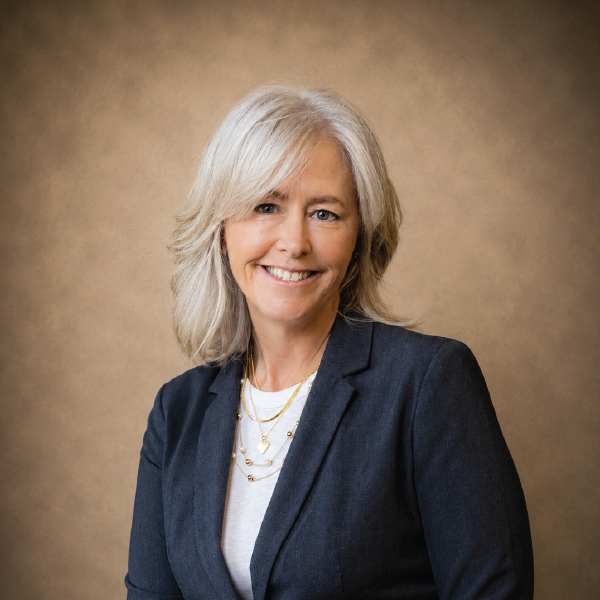
Kirsten has served organizations from nearly every leadership seat-Sales & Marketing, Operations, Integrator, and now Visionary. As a Certified EOS® Implementer with nearly 500 session days, she has helped leadership teams across a wide range of industries build healthier, stronger businesses. That breadth of experience gives her a unique perspective on what separates organizations that gain real traction from those that stay stuck. When Kirsten says she knows what great looks like, it's because she's seen it hundreds of times-and Beacon & Blade was built on that experience.


.jpeg)